
Ho Chi Minh City is the kind of place where hunger can change your plans.
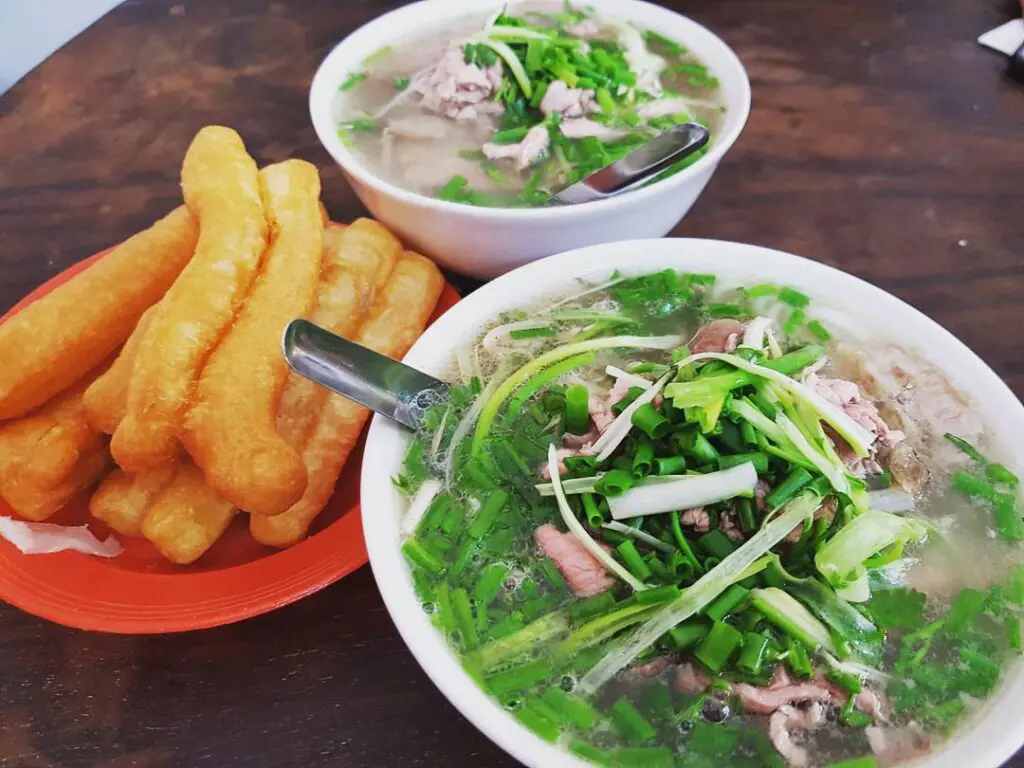
The smell of pork grilling over charcoal drifts from a side street. A fresh baguette cracks open at a banh mi counter. Somewhere nearby, a golden pancake hits a hot pan with a loud sizzle, while bowls of steaming pho arrive at tables surrounded by baskets of fresh herbs.
Food in Saigon is not confined to restaurants. It lives in alleys, old family-run shops, market streets, morning stalls and late-night eateries.
If this is your first visit to Ho Chi Minh City, these are five dishes worth making room for.
1. Banh Mi – The Crunch That Belongs to Saigon
A good Saigon banh mi begins with contrast.
The baguette should be light and crisp enough to crack when you bite into it, while the inside carries layers of flavour and texture. Depending on the shop, fillings can include pâté, cold cuts, pork, butter, pickled vegetables, cucumber, herbs and house-made sauces.
It is convenient enough for breakfast on the move, yet a properly loaded Saigon banh mi can easily become a full meal.
And although banh mi can now be found around the world, eating one on the streets of Ho Chi Minh City still feels different.
Where to try banh mi in Ho Chi Minh City
Bánh Mì Huynh Hoa - Lê Thị Riêng is one of the city's best-known names, with its main location at 26 Le Thi Rieng Street. The shop is particularly known for generously filled sandwiches featuring pâté, cold cuts and butter.
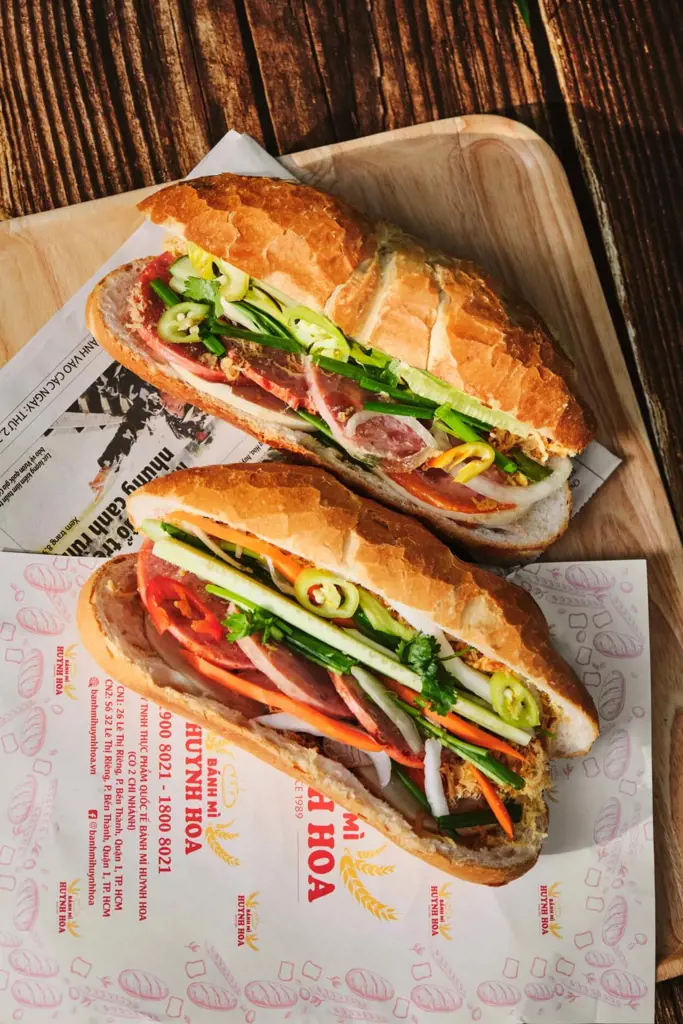
Banh Mì Huynh Hoa - Le Thi Rieng
Generously filled with pâté, cold cuts, herbs and pickled vegetables in a crisp Vietnamese baguette.
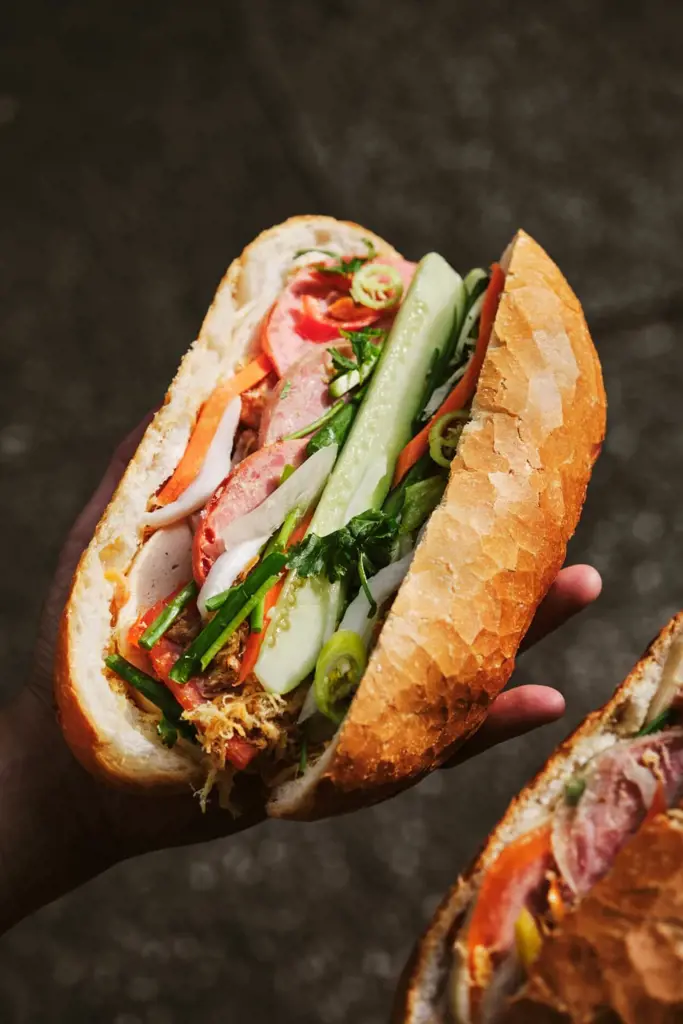
Crispy outside, rich and flavourful inside — one of Saigon’s most iconic banh mi experiences.
Then there is Bánh Mì Bà Huynh, whose official website currently lists 185K Cong Quynh Street as one of its locations. Its signature sandwich is another substantial Saigon-style version, filled with ingredients such as meat, Vietnamese pork sausage, pâté, butter and pickled vegetables.
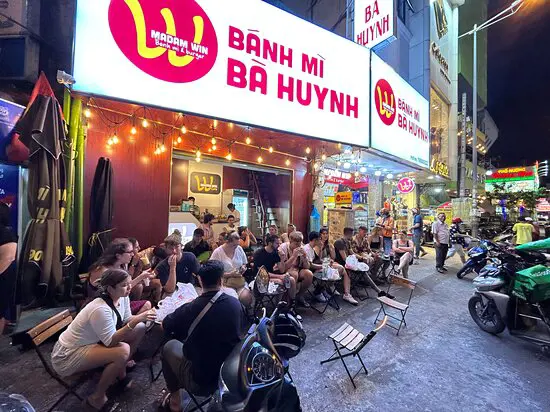
Banh Mi Ba Huynh – A Popular Saigon Stop
A lively local favourite where diners often gather for freshly made, generously filled banh mi.
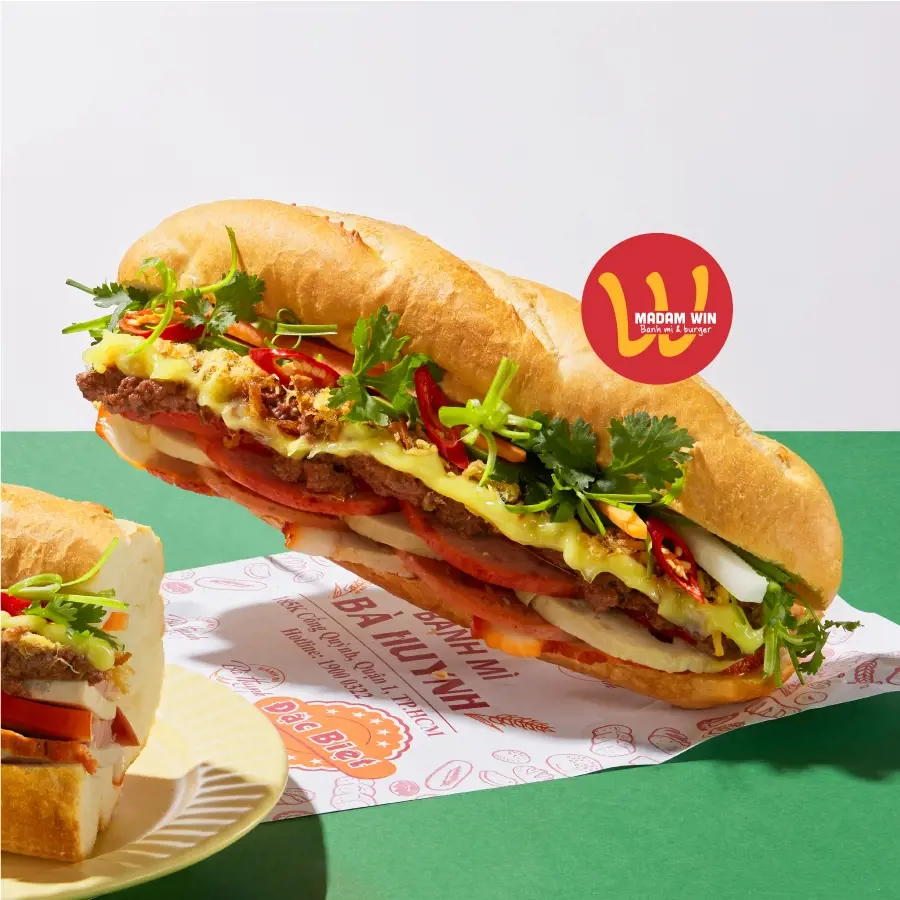
Banh Mi Ba Huynh – Rich, Crispy and Satisfying
Banh Mi Chad
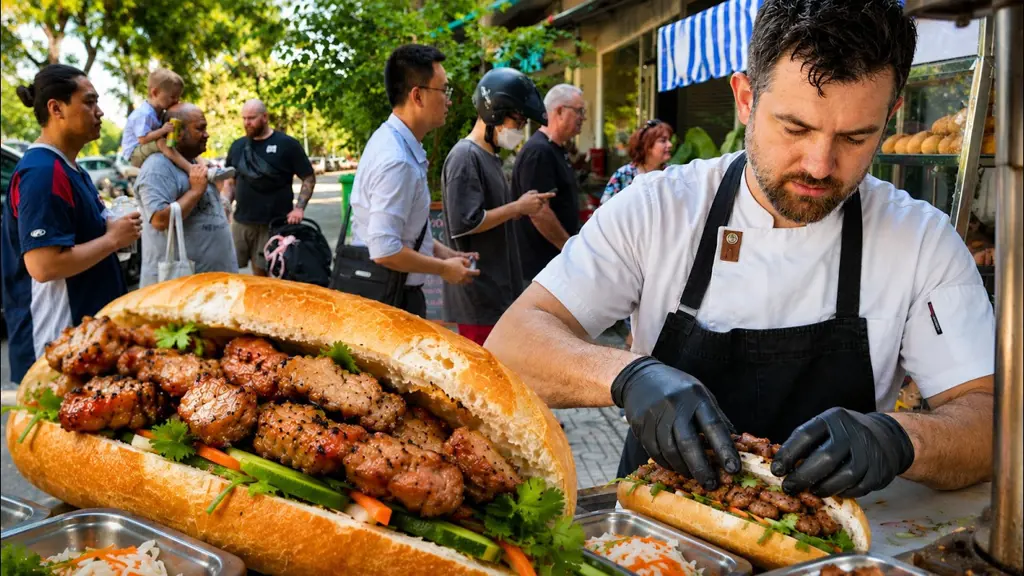
American chef Chad Kubanoff officially opened his 'Chad's Banh Mi' stand in early August 2026 in the An Phu Hung residential area, District 2, Ho Chi Minh City.
For something much newer, there is Banh Mi Chad at 94 Street No. 25, An Phu Hung Residential Area, Tan Hung.
American chef Chad Kubanoff opened his grilled-pork banh mi operation in August 2026. Instead of copying the classic cold-cut style, his version centres on pork marinated and grilled over charcoal, then combined with pickles, herbs and a house-made sauce. During its early weeks, demand was strong enough for customers to queue well before opening, with reports of waits reaching up to two hours.
It is a fascinating example of how Saigon's food culture continues to evolve: traditional enough to be recognisable, but open to new interpretations.
2. Com Tam – The Taste of Everyday Saigon
If banh mi is the city's grab-and-go icon, com tam is one of its great sit-down comfort foods.
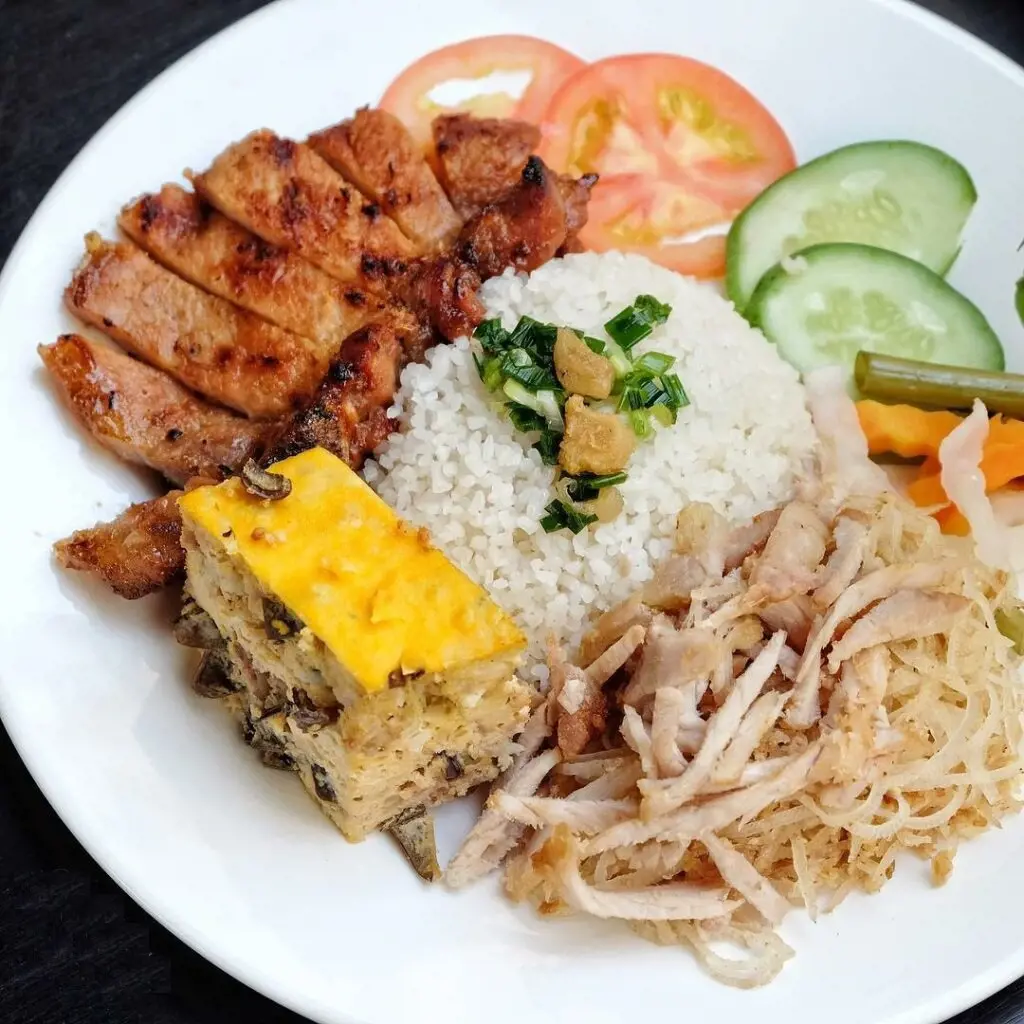
A typical plate brings together broken rice with grilled pork, often accompanied by shredded pork skin, steamed egg cake, a fried egg or other toppings. Then comes the component that pulls everything together: Vietnamese fish sauce dressing.
The moment that really sells the dish, however, often happens before the plate reaches your table.
It is the smell.
Pork sizzling over charcoal, fat caramelising at the edges, smoke drifting into the street — that aroma is inseparable from the experience of eating com tam in Saigon.
Three very different places to experience com tam
Do Phu Coffee - Com Tam Dai Han 13A Dang Dung Street.
For food and history in the same stop
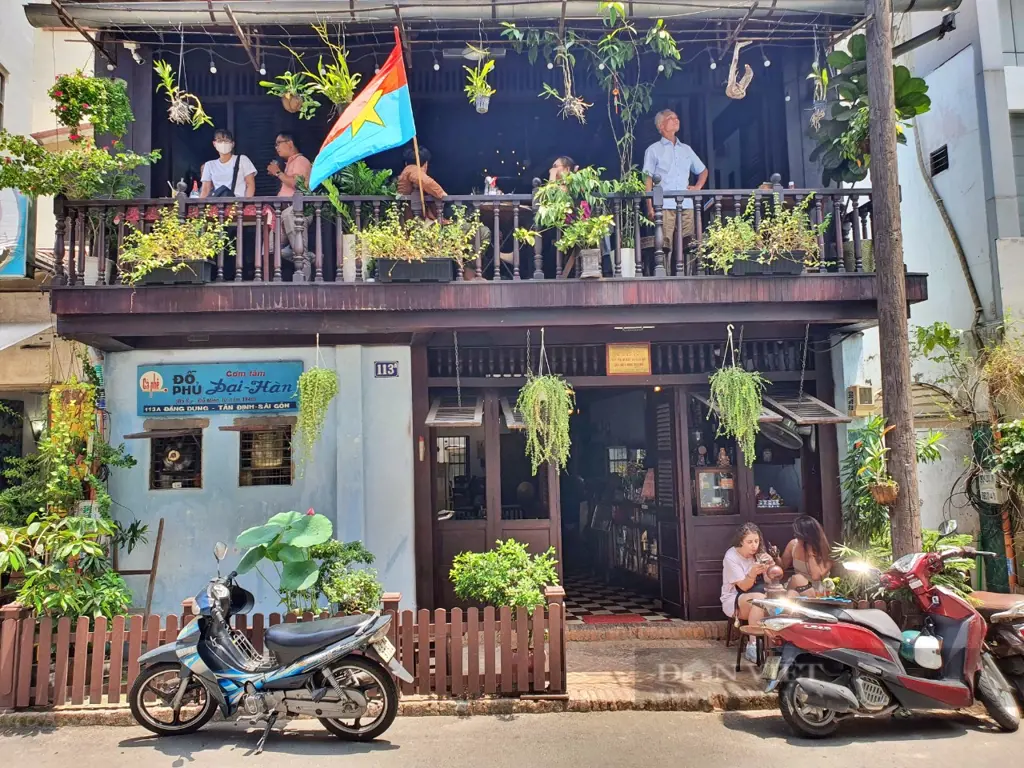
This is more than an old Saigon eatery. The house was once used as a secret communications base associated with the Saigon–Gia Dinh commando forces. During the late 1960s, the family operated a rice-and-coffee shop as part of its public-facing life, and the name Com Tam Dai Han became associated with Korean customers working nearby at the time.
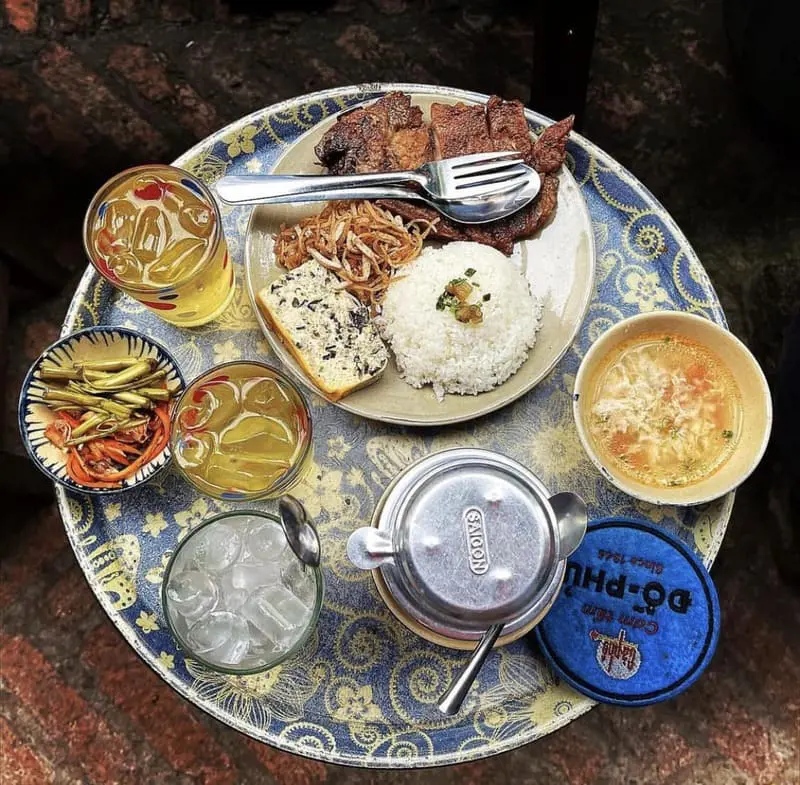
Visit Cà phê Đỗ-Phủ, cơm tấm Đại-Hàn at 113A Dang Dung Street
Com Tam Hong Calmette
It is one of those rare places where lunch can also become a small journey into the city's history.
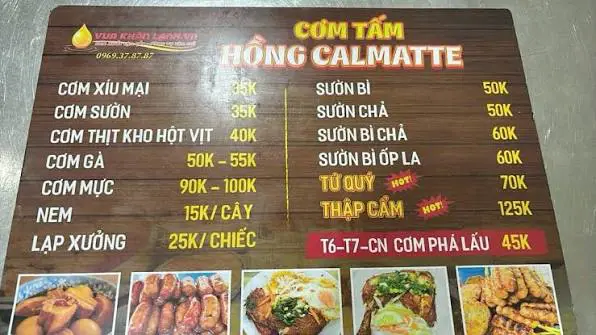
For a very different experience, Quán Cơm Tấm Hồng Calmette is currently listed at 134 Hoang Dieu Street.
Known as a long-running evening and late-night com tam destination, it serves familiar toppings such as grilled pork, shredded pork skin, egg and pork cake, alongside other options. One of its more distinctive offerings is grilled beef wrapped in betel leaves with mo chai.
Com Tam Chi 5 - 34 Tân Canh at 34 Tan Canh Street, Tan Son Hoa.
And then there is the much more neighbourhood-like Cơm Tấm Chị Năm 34 Tân Canh at 34 Tan Canh Street, Tan Son Hoa.
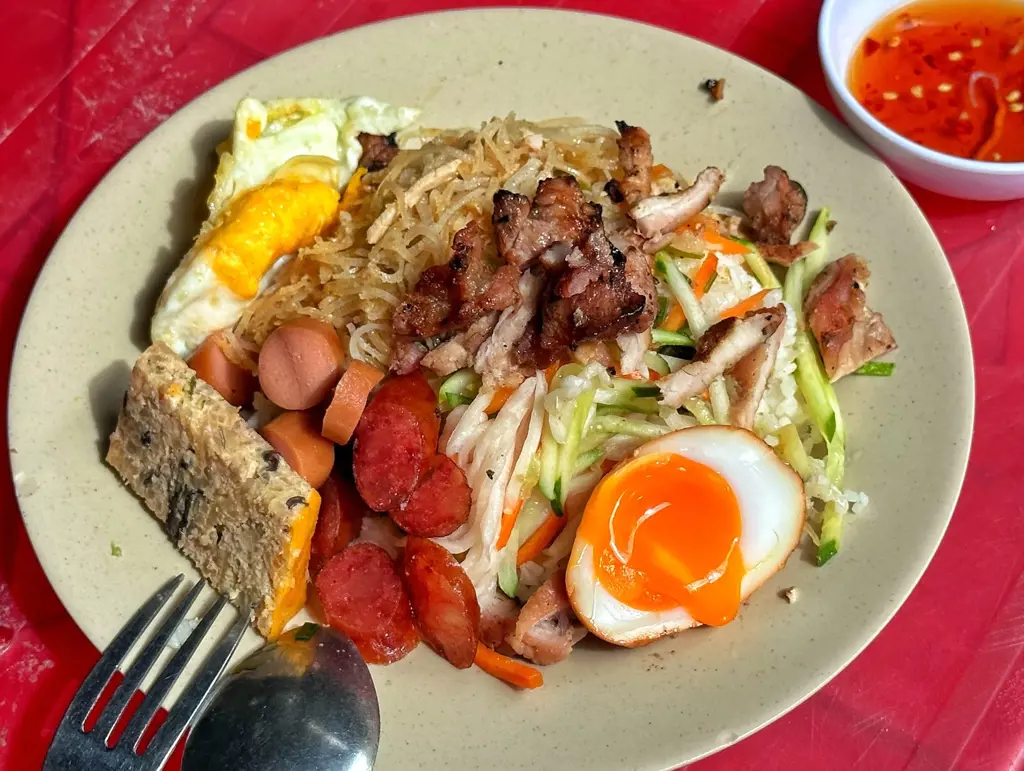
One of the dishes associated with the shop is its braised egg with a soft yolk, served alongside familiar com tam favourites such as grilled pork, shredded pork skin and steamed egg cake. The shop is primarily a morning destination.
Together, these three places show why com tam should never be reduced to simply “rice with pork.”
It can be historical, late-night, intensely local — and unmistakably Saigon.
3. Com Ga Xoi Mo – When Crispy Chicken Gets Serious
Then comes a dish for anyone who believes chicken skin should actually be crispy.
Com ga xoi mo is usually translated simply as fried chicken rice, but that description does not quite capture what makes it interesting.
The goal is contrast: a crisp, blistered exterior while keeping the meat underneath tender and juicy.
One of the names closely associated with the dish in central Ho Chi Minh City is Cơm Gà Xối Mỡ Su Su at 117/1D Cong Quynh Street. The address is also listed by current food guides and local dining directories.
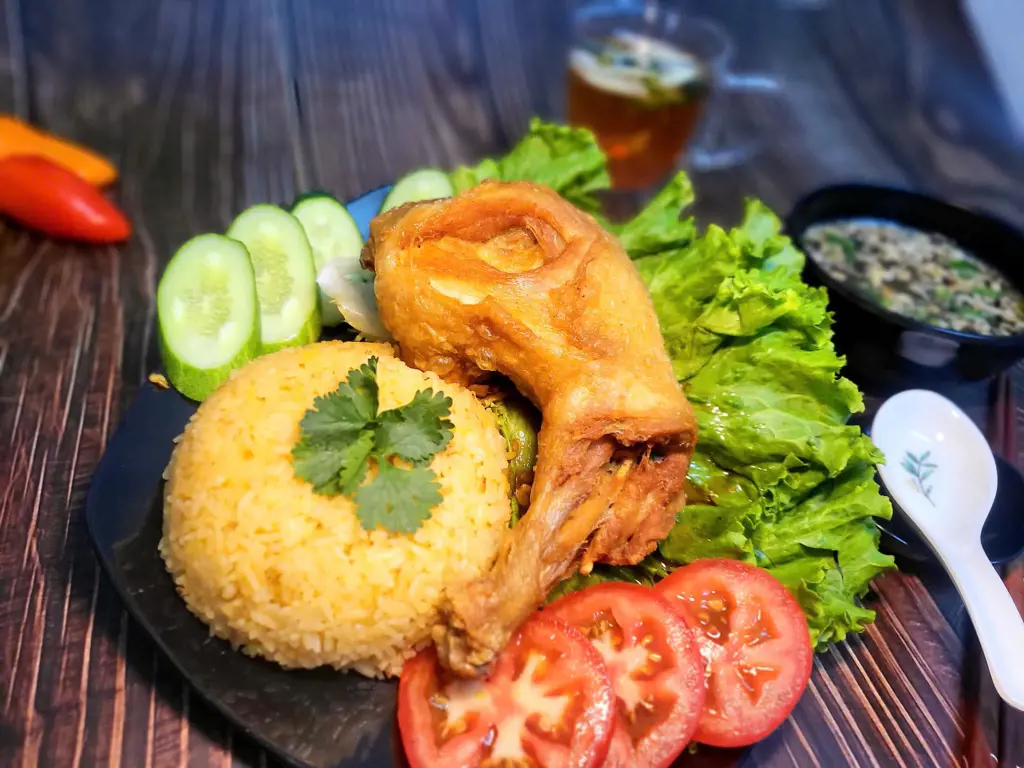
What makes Su Su especially interesting is its oil-pouring setup: instead of simply leaving the chicken submerged in a fryer, hot oil is continuously poured over the chicken, helping create the crisp exterior associated with the shop's version.
The result is exactly the kind of food that photographs almost as well as it tastes: golden skin with an audible crunch, followed by moist chicken underneath.
Pair it with the rice, pickles and sauce, and suddenly “chicken and rice” does not sound simple at all.
4. Pho – And Why Saigon Pho Is Not Quite Hanoi Pho
Of course, you cannot talk about Vietnamese food without pho.
But travellers should know one important thing:
not every bowl of pho in Vietnam is trying to taste the same.
The differences between northern and southern pho are particularly noticeable.
Hanoi-style pho
Traditional northern-style pho is generally more restrained.
The broth tends to be clearer, with the flavour focused heavily on the stock itself. A Hanoi bowl may arrive relatively simply with rice noodles, beef or chicken, scallions and herbs, while condiments and additional vegetables are kept to a minimum.
The idea is often to taste the broth first and allow the cook's stock to remain the centre of the bowl.
Saigon-style pho
Southern pho developed a more customisable personality.
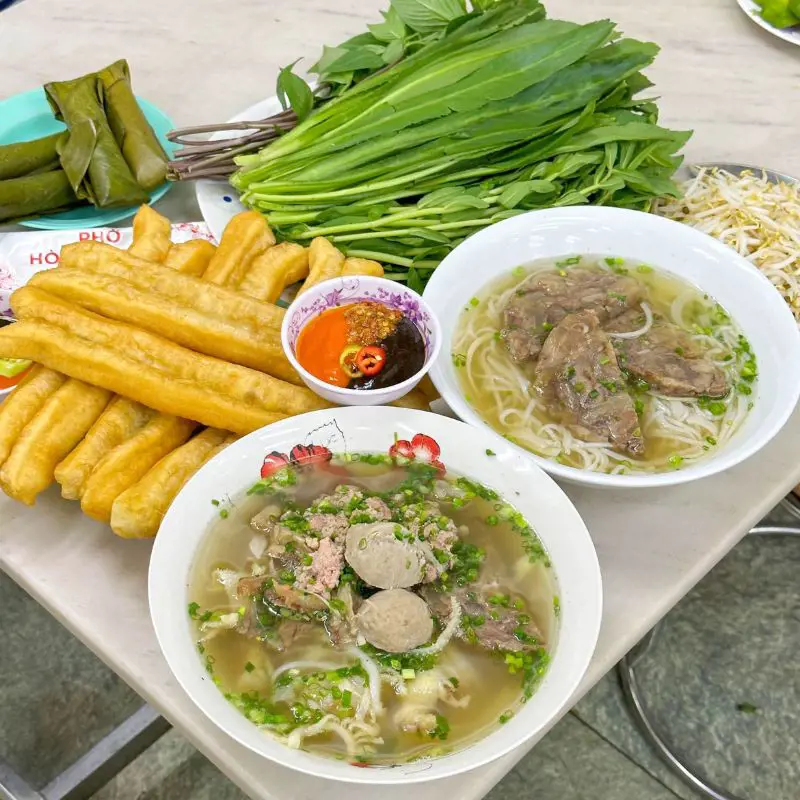
The broth is typically fuller, somewhat sweeter and can appear slightly cloudier than its northern counterpart. A Saigon table is also far more likely to come with bean sprouts, Thai basil, sawtooth coriander, fresh herbs, hoisin sauce and chilli sauce.
Beef balls and a wider choice of beef cuts are also common.
So when a large plate of herbs lands beside your bowl in Ho Chi Minh City, it is not decoration.
It is part of the meal.
Where to try pho in Saigon
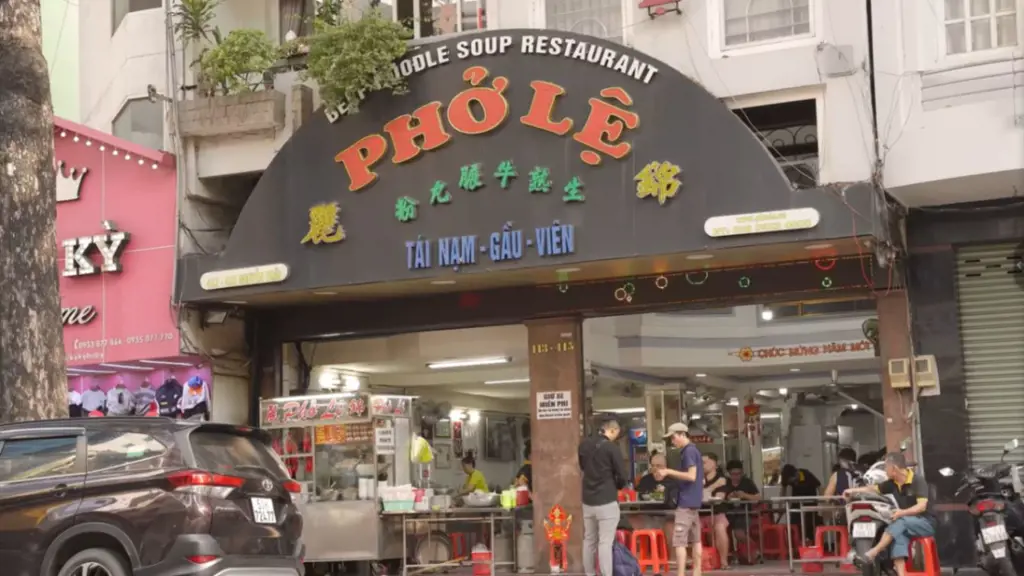
Pho Le is one of the city's established pho names. Its official website lists locations including 413–415 Nguyen Trai Street and 303–305 Vo Van Tan Street.
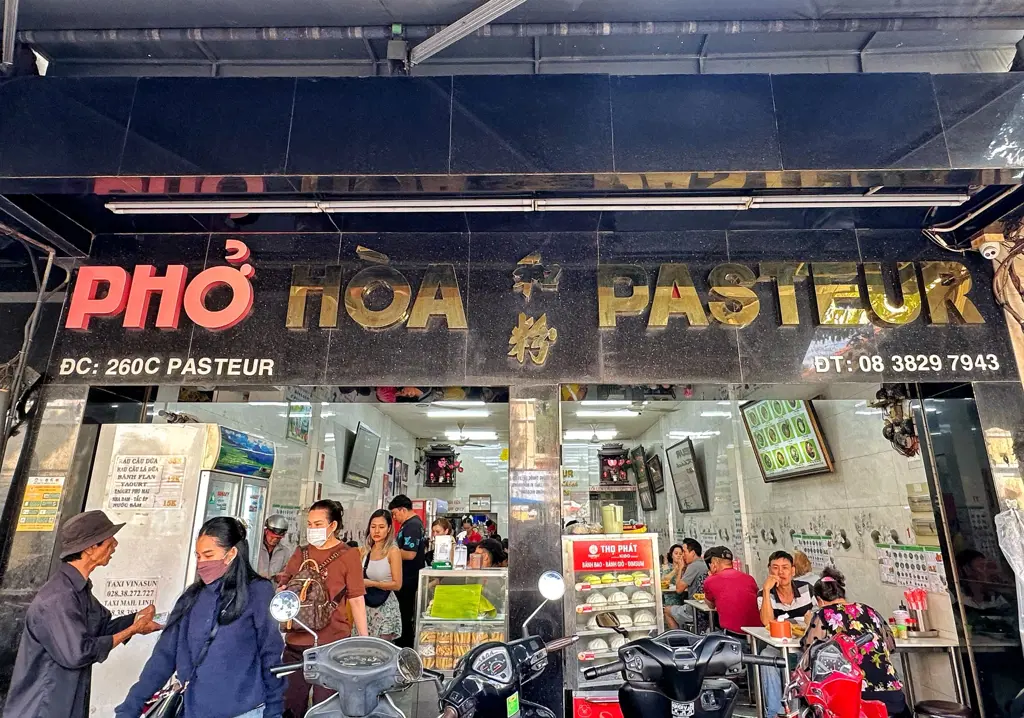
Phở Hòa Pasteur remains another widely known address at 260C Pasteur Street.
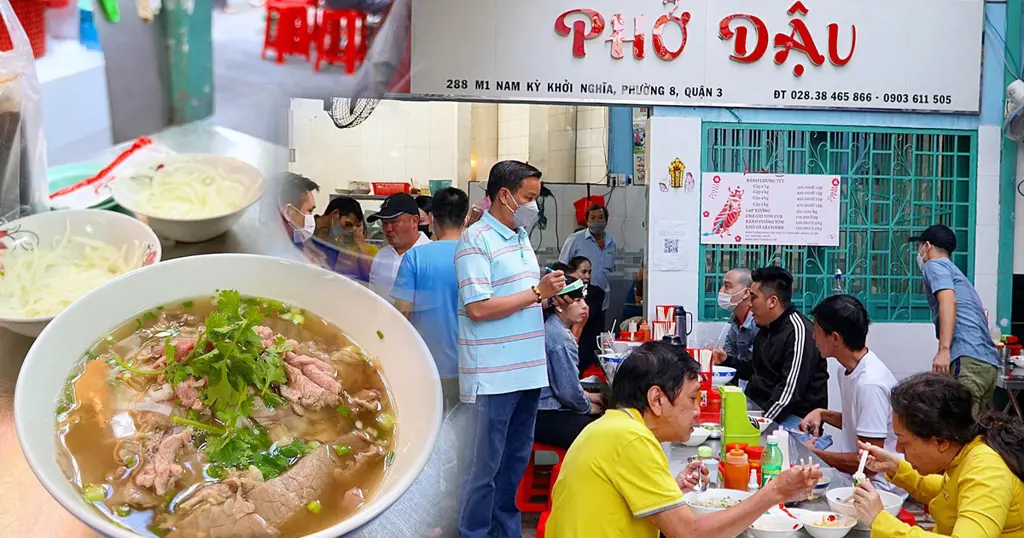
And for an interesting contrast, try Phở Dậu at 288 M1 Nam Ky Khoi Nghia Street.
Phở Dậu is particularly useful for this food journey because it is known for a northern-style approach to pho, despite being one of Saigon's long-established pho destinations. Its lighter presentation provides an interesting comparison with the richer southern style found elsewhere in the city.
Trying both styles is probably more interesting than arguing about which one is “better.”
They tell two different chapters of the same dish.
5. Banh Xeo – The Sizzle You Hear Before the First Bite
You will often hear banh xeo before you eat it.
Batter hits a hot pan.
Xèo.
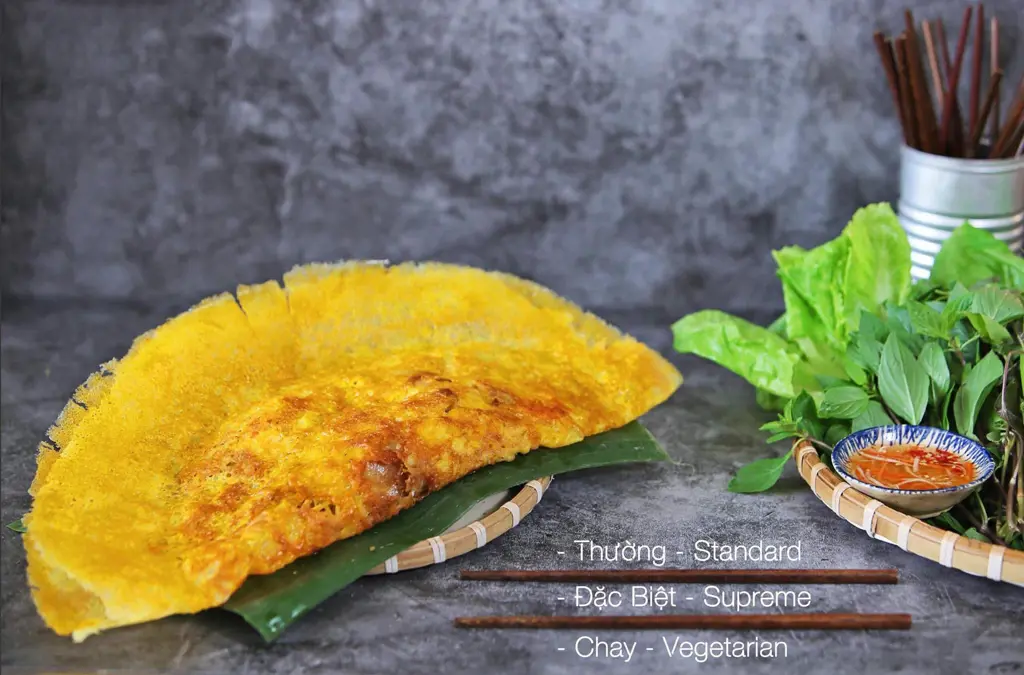
That sizzling sound is commonly associated with the name of this golden Vietnamese pancake.
In Ho Chi Minh City, southern-style banh xeo is particularly easy to find. The pancake is generally large and thin, with a crisp golden shell wrapped around fillings such as shrimp, pork and bean sprouts.
But eating banh xeo is only half about the pancake.
The other half is everything surrounding it.
You tear off a crisp piece, wrap it with fresh leaves and herbs, then dip the bundle into sweet-and-sour Vietnamese fish sauce. The crunchy pancake, juicy filling, cool herbs and salty-sweet dipping sauce all arrive in the same bite.
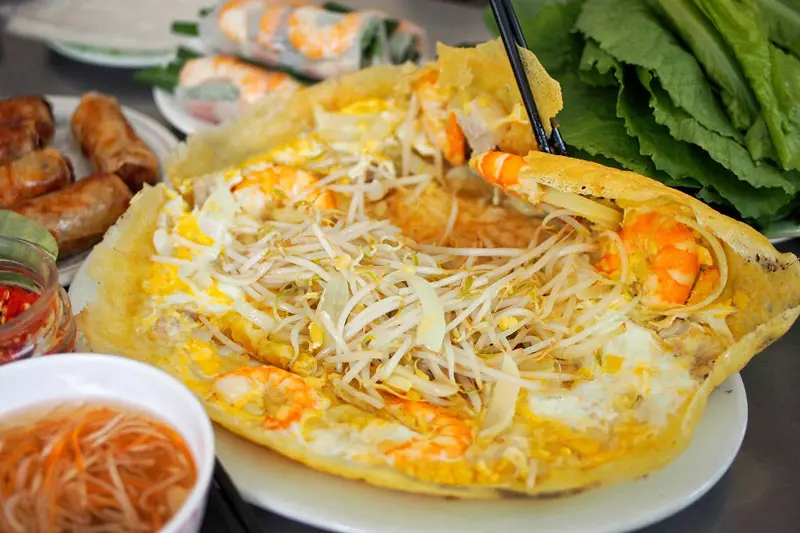
One famous place associated with the dish is Bánh Xèo 46A at 46A Dinh Cong Trang Street, Tan Dinh.
The restaurant has long been associated with Saigon's banh xeo scene, and its own website describes it as a business with decades of history.
Come hungry.
A proper southern banh xeo is not a tiny pancake placed politely in the centre of a plate. It is meant to be broken apart, wrapped in handfuls of greens, dipped generously and shared around the table.
Five Dishes, Five Different Sides of Saigon
What makes Ho Chi Minh City's food culture compelling is not simply the number of dishes available.
It is how different they feel from one another.
Banh mi gives you the crack of a baguette and the energy of eating on the move.
Com tam brings charcoal smoke, grilled pork and the rhythm of an everyday Saigon meal.
Com ga xoi mo is pure crispy-chicken satisfaction.
Pho reveals how one of Vietnam's most famous dishes changed as it travelled south.
And banh xeo turns dinner into something tactile — tear, wrap, dip and eat.
You do not need white tablecloths to understand Saigon.
Sometimes you just need a small plastic stool, an empty stomach and enough time to follow the smell of something delicious around the next corner.
Come to Ho Chi Minh City for the sights. Leave remembering the food.
Travel Tip: Restaurant addresses, opening hours, menus and operating arrangements can change. For long-running local eateries as well as newer businesses such as Banh Mi Chad, travellers should confirm the latest information with the restaurant or its official channel before visiting.